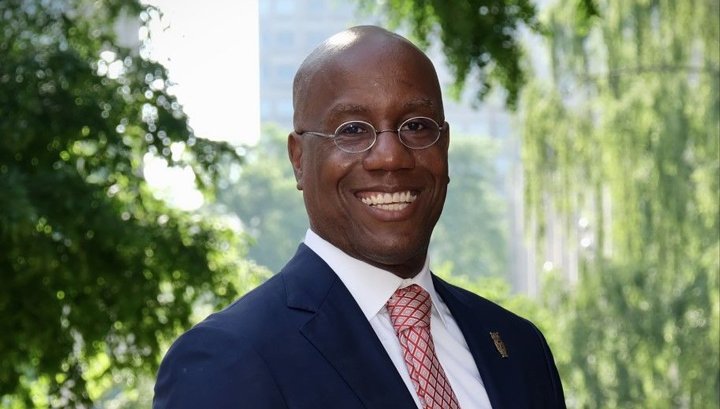
Guest Commentator: Dr. Jason Wingard, President, Temple University @TempleUniv
How should universities and employers work hand-in-hand to ensure successful employment after students graduate?
The world of work is evolving rapidly before our eyes; the pace of change is quickly accelerating, prompted by digital technologies and increased globalization.
The skills and proficiencies that organizations once needed from their employees are quickly shifting. Employers now need workers who are not only technically competent but also extremely agile—able to pivot, master new skills, and think on their feet. To ensure graduate success in this contemporary workplace, it is imperative that higher education work with employers in areas ranging from curriculum and partnerships to culture change.
Employer-Informed Curricula
Currently, many universities continue to invest—wisely—in a liberal arts curriculum that teaches critical thinking, communication, and cross-discipline integration skills across fields. These are essential professional skills, according to a 2018 Manpower Group global report and a more recent AAC&U survey of employers. Equally as crucial is the need to teach highly specific skills in a just-in-time way that matches the employers’ needs today. To do this, universities need to work with industry to understand changing market dynamics. Assessing this together on a regular basis will guide how courses and curriculum are updated, as well as how to hire practitioner faculty. This will promote a resilient, dynamic learning ecosystem reflecting the fast pace of change in the 21st century.
Partnerships Promoting Practical Experience
In response to market trends and needs, higher education must establish tangible partnerships that bring real-world experiences to students in the form of capstone courses, internships, and hands-on projects. According to a 2017-2018 NACE report, more than 50% of students who took part in internships or co-ops stated they were “very” to “extremely” improved by their internship/co-op experience in areas such as work ethic, teamwork, communication, and problem-solving. There’s also opportunity to collaborate on developing new learning opportunities, including the delivery of upskilling or reskilling bootcamps and certificate programs. This will keep our workforce armed with the latest knowledge that businesses seek in order to thrive.
Diversity as an Investment
By 2065, the U.S. will not have any single ethnic or racial majority. Ensuring that our increasingly diverse cohorts of graduates will be supported in the workforce is an urgent matter. A new collaboration between Temple University’s College of Public Health and Department of Nursing and the Independence Blue Cross (IBC) Foundation provides full tuition for Philadelphia public high school students of color pursuing a Bachelor of Science in Nursing degree at Temple University. This is an example of how industry and higher education can work together to promote access to and persistence in college, and create a well-prepared pipeline of talent to a major U.S. employer.
The urgency is real. Together, universities and employers can provide innovative and evidence-based solutions to meet the demands of the day. This transformation is possible and influenced by the aim of developing a best-in-class workforce for Philadelphia and the world.
Through Recharge & Recover PHL, the Chamber is working with our members to position Greater Philadelphia as the new national model to learn, apprentice, and work in the jobs of the future.
This objective is part of five aspirations of Recharge & Recover PHL with the aim to support not only Greater Philadelphia’s recovery but to also provide a means to differentiate our region for decades to come.