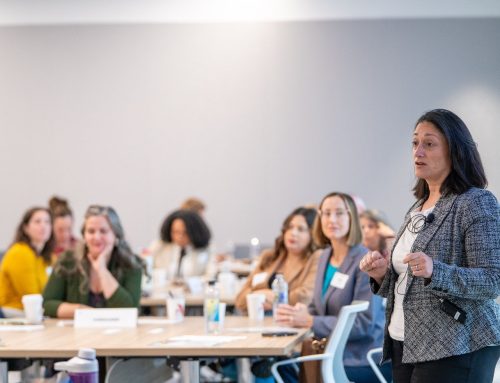
Guest Commentator: Farnia Fresnel, MBA, PMP, ACC, Trusted Adviser, Strategic Partner, The Lenserf Group, @LenserfGroup
What steps can small businesses take to help employees define and subsequently coach them through their career goals?
Over the past few years, the pandemic effects have blurred the lines between work and life, resulting in changes in employees and their priorities. Employees want to move their careers forward and not at the expense of their personal lives. The pre-pandemic concept of simply “coaching through career goals” now becomes “coaching the whole person” to align all of their goals. This shift may come at a cost. Where large entities are able to maximize investment in learning and development, wellness, and other benefit programs, small businesses may not have the same resources. They do, however, have fewer layers and less formal access, which can be beneficial to relationships and goal setting. Coaching the whole person requires SEEing the whole picture. Starting at the top of the house, small businesses can do the following:
- Say who you are. Your business has changed. Do you know what that means? Do your teams know what that means? Given the changing times, what is your new corporate vision, mission, and strategy? Supply chain, retention, fuel costs, weather, data, and information security and a host of other issues are omnipresent and are forcing rapid transformation in how you do whatever it is that you do. Be transparent, explicit, and authentic. Assert what you are doing, for whom, by when, and how.
- Evaluate your leadership. While larger firms can be proactive in hiring into new gaps, small businesses might ask existing leaders to wear new hats. What new skills do those leaders need to learn in order to lead during these times? How might they grow to meet the new vision? Leaders set the tone for company culture. What is the current company culture? How does that align with the vision, mission and strategy? What leadership roadblocks (or preconceptions) might need to be cleared to make way for the growth of your people?
- Engage your teams in groups. Oftentimes it is not financially feasible for small businesses to invest in coaching programs for individual contributors. However, group engagement and coaching programs are affordable. With the growing popularity of hybrid return to work programs, employees still don’t have consistent access to water cooler or ad hoc, private conversations about things that matter to them (but may be somewhat unrelated to work). Group coaching programs can help teams to quickly establish the psychological safety for virtual and hybrid environments. These programs also help individuals to reflect on how they’ve changed, to intentionally reground and realign with their purpose, and to set intentions for their work.
The currency of trust and engagement is vulnerability. Businesses need talented and committed employees to set big career goals to help meet business goals. Today the option exists to reframe. “All of you are welcome here. We can grow together. Let’s set goals to do that.” Simply put, see them and let them see you.
Through Recharge & Recover PHL, the Chamber is working with our members to position Greater Philadelphia as A place known for investing in and growing small, Black- and brown-owned businesses.
This objective is part of five aspirations of Recharge & Recover PHL with the aim to support not only Greater Philadelphia’s recovery but to also provide a means to differentiate our region for decades to come.
Upcoming Event
[In-Person] Diverse Procurement Collaborative Reception: A Commitment to Economic Inclusion and Business Growth
Wednesday, June 15, 2022 | 4:30 PM – 6:30 PM
Join together in-person to acknowledge the impactful work done through the Diverse Procurement Collaborative (DPC) after its groundbreaking inaugural year. Recognize, alongside this year’s DPC Cohort, its supporters, and regional leaders, the progress and promise that expanding diversity and inclusion in our business community brings to the future of our local communities. Take this opportunity to network and build stronger relationships with suppliers and buyers alike and ultimately be a part of a growing movement to cultivate minority business growth through supplier diversity and inclusive procurement practices.