
Guest Commentator: Dan Kerr, President, Burns Mechanical
What steps must we collectively take as a region to become a place known for investing in and growing small Black, brown, and locally owned businesses?
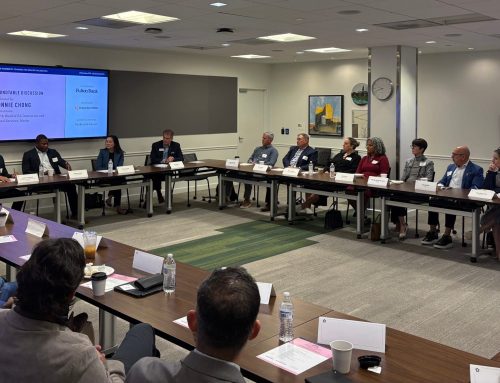
My stomach sank as we kicked-off the first small and medium-size business focus group as part of the the Chamber of Commerce for Greater Philadelphia’s regional Recharge and Recovery PHL initiative this past summer. Dozens of entrepreneurs with wide-ranging differences first coming “together” in an all-too-familiar Zoom setting: Business leaders comprised of various ethnicities, of B2Bs and B2Cs… ranging in size from small street-scape salons to $50 million middle market businesses… across several verticals, with some positioned to weather a pandemic and others shut-down and at genuine risk of total failure. Passions were running high. That we were able to find sub-committee consensus at all is a testament to the skill of our facilitators at the Chamber and McKinsey.
A significant aspiration emerging from the taskforce’s work is for Philadelphia to be a place known for investing in and growing local, small Black and brown-owned businesses. I have to admit that the issue of local disadvantaged business investment can be intimidating. But to brush off the aspiration and move forward from our collective work “business as usual” would amount to a step backward. And so, as a task force insider, I offer the perspective that I own – that is, as a middle market, specialty sub-tier service provider who has made a living working on and in some of Philadelphia’s most prominent buildings.
Existing methods of procuring the services of local minority-owned businesses aren’t all bad, of course, but the word-count constraints of a blog post force me to get right to the heart of the matter:
Our present system of diverse supplier procurement of goods and services in the building industry doesn’t often spread wealth and opportunity. Rather, it tends to push risk down the supply chain and creates a system that encourages gaming at the expense of meaningful, sustainable investment.
However well-intended, measuring the success of a capital program’s investment in local, minority-owned business as a required or targeted percentage of total project cost can have significant negative consequences. When paired with low-price contract procurement of sub-tier trades and suppliers, who often hold the lion’s share of MBE contracts, bad practices are unwittingly encouraged. These practices include rewarding pure pass-throughs at extraordinarily low fees, awarding work to those taking the longest risks, to those making the biggest pricing mistakes, and to those planning to make their desired profit margin through change orders. Not exactly a recipe for success for anyone involved.
The good news is that it doesn’t have to be this way. We have enjoyed genuine “win-win” experiences with a myriad of alternative procurement strategies. Methods such as owner-direct contract carve outs, true mentor-protégé relationships, and selecting specialty trades early (when final costs can best be influenced) on the bases of qualifications and cost transparency. Academic research, such as that funded by the Charles Pankow Foundation and the Construction Industry Institute, bear proof that more collaborative procurement and execution strategies create superior results.
Let’s choose to use our collective discontent as the fuel of creative resolution, to bring our aspirations to fruition, and not let this unique opportunity slip past “business as usual.”
Through Recharge & Recover PHL, the Chamber is working with our members to make Greater Philadelphia a place known for investing in and growing small Black, brown, and locally owned businesses.
This objective is part of five aspirations of Recharge & Recover PHL with the aim to support not only Greater Philadelphia’s recovery but to also provide a means to differentiate our region for decades to come.