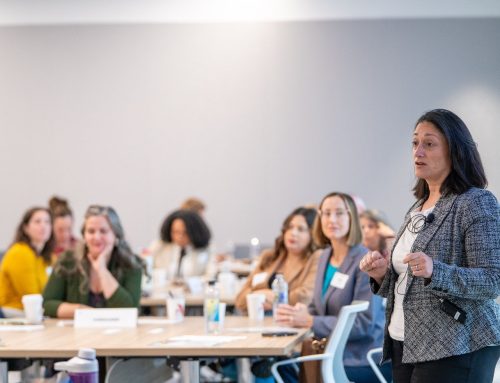
Guest Commentator: Denise Dennis, President & CEO, The Dennis Farm Charitable Land Trust
Why is it important to preserve sites of historical significance and how do those sites serve as cultural and educational resources?
Historic preservation recognizes the importance of protecting the historical built environment in a world of constant inevitable change. It is designed to ensure that our historic material culture is preserved for present and future generations.
It is my pleasure to serve as Founding President & CEO of the Dennis Farm Charitable Land Trust, a 501 (c)(3) nonprofit, established for the historic preservation and natural conservation of the 153-acre Dennis Farm, located in the Endless Mountains of Northeast Pennsylvania. Our office is in Philadelphia. The farm is listed on the Natural Register of Historic Places and is a rare, possibly unique, site. My ancestors—free African Americans—came to the region from New England in 1793 and purchased land. The farm has remained our stewardship to the present. To put this in perspective: in 1793, George Washington was President and Philadelphia was the United States capital.
Several features make the farm historically significant: documents confirming the history; the original homestead foundation; a half-mile of stonewalls; the wall-enclosed family cemetery where veterans of the American Revolution, War of 1812, and Civil War are interred; the barn complex remains; and the farmhouse (b. circa 1825). We are currently raising funds to transform the farmhouse into a museum. Select artifacts from the Dennis Farm are in the permanent collection of Smithsonian’s National Museum of African American History and Culture.
Education is key to our mission. We have a partnership with Keystone College where we hold an annual symposium. Keystone also trains student docents who give tours of the Dennis Farm. In 2008 and 2009, Binghamton University held an archaeological field school at the farm and unearthed approximately 12,000 artifacts, some of which will be exhibited in the Farmhouse Museum. Universities in Pennsylvania and Delaware and also the local high school have held on-site research projects at the farm. In February, we host an annual forum on Racial Understanding, most recently in partnership with the Museum of the American Revolution in Philadelphia. In 2020, 11 colleges and universities were represented at the forum.
Each civilization leaves its imprint on the world in sites, buildings, structures, and objects that attest to human creativity and ingenuity across the millennia. Whether it is the great pyramids of Egypt or Independence National Historical Park, historical sites touch our spirits and leave us in awe. The material culture of human history connects us to the past and, by educating, helps us to understand our place in human history. When we visit an inherited environment, we are transported to another time and that nurtures our psychological, intellectual, and spiritual health.
The Dennis Farm is honored to be a part of the preservation movement and to leave our imprint for posterity.
The Dennis Farm Charitable Land Trust is a minority-owned and women-owned business. The Chamber is committed to recognizing the cultural and economic impact of enterprises owned by Black and brown leaders in our region.
Through our Diversity, Equity, and Inclusion (DEI) initiative, we aim to drive economic competitiveness, highlight diverse employee populations, and promote inclusive growth throughout the Greater Philadelphia region.