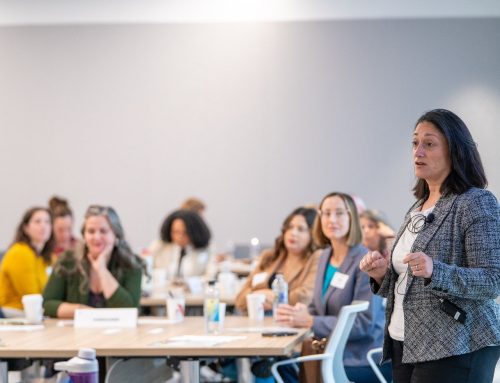

Guest Commentator: Rebecca L. Watts, Ph.D., Regional Vice President, Western Governors University @wgu
How can online learning help to create a more equitable higher education system?
Talent is universal, but opportunity is not. Strengthening equity in higher education is essential complex work, requiring education providers to deliver on the promise of access, holistic student support, and optimal outcomes.
Online learning is uniquely positioned to advance equity by meeting the needs of those who historically have been underserved: people living in poverty, students of color, first generation students, rural residents, urban dwellers, and learners who begin post-secondary education long after high school.
In Philadelphia, Western Governors University (WGU) students experienced barriers to reaching their goals before enrolling in WGU. Issam Ahmed, a B.S. in computer science graduate, had a full-time job and family obligations. He said, “It was extremely challenging to fit a traditional university into my busy schedule.” On affordability, Janese Felder, an M.B.A. student, said, “While looking for master’s programs, I found them to be substantially overbearing with many costs.”
In Pennsylvania, more students are discovering that online learning can help them reach their goals. In the fall of 2018, 23% of Pennsylvania undergraduates and 33.2% of graduate students enrolled in distance courses. In the wake of COVID-19, that number is growing.
Online learning also liberates students from having to be in lock-step with a cohort of learners. In the competency-based model, students who can learn faster or spend more time on their schoolwork can demonstrate their mastery and advance at their own pace. Not only do they earn their degrees faster, they also save money.
Novella Winborne, a student in the WGU B.S. in accounting program explained, “There is such freedom in being able to take my laptop with me and work anywhere, without having to work around a brick and mortar class schedule.”
But, removing only some of the barriers isn’t enough to create and sustain equity. Online education providers must assure excellent program quality, affordability, financial assistance, relevance to in-demand careers, individualized support for every student, and connections to employment after graduation.
Education policy must recognize the value of measuring knowledge gained, rather than clock hours, and state policy must ensure that all residents have access to affordable broadband.
By advancing equity in higher education, we will improve the lives of individuals, families, and communities. A more equitable higher education system is a game changer for all.
The Chamber is working to leverage the region’s assets to make Greater Philadelphia a premier talent hub. We are doing this through our initiatives that focus on creating clear pathways that align individuals and employers.