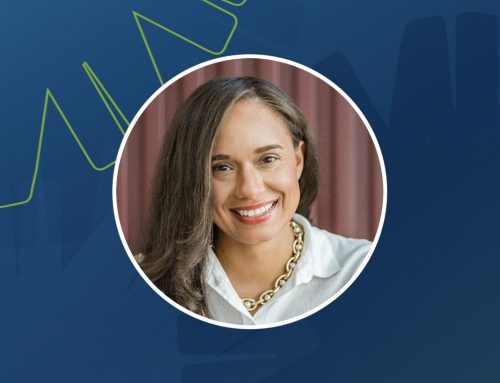
Submitted by: Patricia Q. Connolly, Executive Director, Drexel LeBow’s Raj and Kamla Gupta Governance Institute @LeBow; and Richard Godwin, Blockchain Strategy Lead, SEI Investments Company
The term “blockchain” is everywhere these days. From its architectural benefits to its use in cryptocurrencies like Bitcoin, blockchain is gaining traction, making it imperative for industries, executives, and regulators to gain a fundamental understanding of the technology and its possible applications.
As a result of the 2008 financial crisis, Bitcoin was anonymously developed with the goal of creating a decentralized form of currency that did not rely on banks and their intermediaries. The cryptocurrency effectively provides a digitally distributed accounting ledger, and there are no central authorities needed to maintain it. Bitcoin’s blockchain serves as the record-keeping function, which enables its users to easily transfer ownership of Bitcoin to other network participants. Blockchain’s ledger function is what has drawn the attention of many businesses across a variety of industries.
Each transaction on the ledger is digitally broadcast to all parties in the network, who then verify the validity of the transaction. Not all enterprise blockchain implementations are alike;. however, similar key features exist across all platforms:
- Redundancy – All participants maintain their own copies of the ledger and are notified when their respective copies are not in consensus with the other participants’.
- Disintermediation– Automatic updates to the ledger eliminate network breaks, as there is no reliance on centralized changes or system approvals. The technology is inherently “trustless” because blockchain creates a transparent, indelible record of transactions and provides a way for all participants to safely share and access data in a public network setting.
- Automation – Businesses can leverage smart contracts that interoperate with the ledger to automate business logic related to the shared ledger data. This reduces the need for manual reconciliation across multiple organizations who are parties to the ledger.
The underlying blockchain technology has applications that could result in substantial changes to how businesses and individuals transfer information. Any industry in which transactions require a permanent record and trust from all parties can benefit from and potentially use the technology.
More specifically, blockchain can simplify paper-intensive processes that require an accounting ledger. Process-heavy practices, such as real estate title issuances and transfers, contract execution, insurance or trade finance, could similarly extend blockchain technology to digitize and mechanize current processes. Executives even have the opportunity to incorporate blockchain technology into their roles on company boards. For example, some have identified blockchain as a technology that could be applied to proxy voting in order to reconcile and capture votes, as well as deliver the results in an indisputable format.
Keeping up with technology’s rapid evolution can be challenging, but the earlier that organizations begin conversations about next-generation technologies like blockchain, the more likely they will be able to take advantage of and integrate these developments.
This article was adapted from a longer article about blockchain and how companies should use it. To access the longer version click here.